High-Availability Server Hosting for CRM Customer Service is crucial for maintaining seamless operations and a positive customer experience. Imagine your CRM system going down – lost sales, frustrated customers, and a damaged reputation. This comprehensive guide dives deep into the technical aspects, practical considerations, and cost-benefit analysis of high-availability solutions, ensuring your CRM stays up and running, no matter what.
We’ll explore everything from load balancing and clustering to security and ROI.
This in-depth look at high-availability server hosting for CRM customer service will provide a clear understanding of how to optimize your system for peak performance and customer satisfaction. We’ll cover the critical components, technologies, and strategies for building a robust and resilient infrastructure that minimizes downtime and maximizes efficiency.
Introduction to High-Availability Server Hosting
High-availability server hosting is crucial for any critical application, especially CRM systems powering customer service. It ensures your CRM remains accessible and responsive 24/7, minimizing downtime and maintaining a positive customer experience. This is paramount for businesses relying on CRM data for real-time interactions and operational efficiency.This robust infrastructure mitigates risks associated with server failures, network outages, or other unforeseen circumstances.
High availability translates directly into increased customer satisfaction, reduced operational costs, and enhanced business continuity.
Understanding High-Availability Hosting for CRM
High-availability hosting isn’t just about having redundant servers; it’s about a carefully designed system ensuring uninterrupted service. A CRM system, especially one handling real-time customer interactions, needs to be constantly available to support agents and customers. This reliability directly impacts agent productivity, customer satisfaction, and ultimately, business revenue.
Importance of Uptime and Responsiveness
Uptime and responsiveness are paramount in a CRM environment. Prolonged downtime can result in lost sales, frustrated customers, and damage to your brand reputation. Fast response times are essential for providing prompt assistance and resolving issues quickly. This translates into happier customers and increased loyalty. Consider a scenario where a crucial CRM system is unavailable during a peak sales period; the lost revenue and damaged customer relationships can be substantial.
Components of a High-Availability Infrastructure, High-Availability Server Hosting for CRM Customer Service
A high-availability infrastructure comprises several key components working in concert. These include redundant servers, failover mechanisms, load balancers, and robust network infrastructure. Each element plays a crucial role in ensuring uninterrupted service. For instance, redundant servers provide backups in case of failure, while load balancers distribute traffic evenly across available resources.
Types of High-Availability Hosting Solutions
Several high-availability hosting solutions are available, each with its own strengths and weaknesses. Choosing the right solution depends on your specific needs and budget.
High-availability server hosting for CRM customer service is crucial for smooth operations. It ensures your CRM system is always up and running, preventing frustrating downtime for your support team. This directly translates to happier customers and a more efficient workflow, maximizing the overall functionality of your system, like described in Maximizing CRM Functionality with Server Hosting Features.
Ultimately, robust high-availability hosting is key to a successful CRM customer service strategy.
- Load Balancing: Distributing incoming traffic across multiple servers. This prevents overload on any single server, ensuring consistent performance. A good analogy is a highway with multiple lanes. Traffic is distributed across all lanes to avoid congestion.
- Clustering: Connecting multiple servers as a single logical unit. If one server fails, the others automatically take over, maintaining uninterrupted service. Imagine a team working together; if one person leaves, another takes their place seamlessly.
Comparison of High-Availability Hosting Solutions
The table below compares different high-availability hosting solutions based on uptime guarantee, cost, and scalability.
| Feature | Solution A (Load Balancing) | Solution B (Clustering) | Solution C (Hybrid Approach) |
|---|---|---|---|
| Uptime Guarantee | 99.99% | 99.999% | 99.95% |
| Cost | Moderate | High | Moderate to High |
| Scalability | Good | Excellent | Good |
Note: Uptime guarantees and cost vary depending on the specific provider and configuration. Solution C represents a hybrid approach combining load balancing and clustering for optimal performance.
Considerations for CRM Customer Service
High-availability server hosting is crucial for CRM customer service applications. These systems are the lifeblood of many businesses, and downtime directly translates to lost revenue, frustrated customers, and damaged brand reputation. A robust high-availability setup ensures seamless operations, minimizing disruptions and maximizing customer satisfaction.Customer service relies heavily on CRM systems. When these systems are down, customers can’t access their accounts, submit tickets, or get the help they need.
This leads to a cascade of negative impacts, from lost sales to tarnished brand image. Implementing high-availability solutions is therefore not just a technical exercise; it’s a strategic imperative for maintaining customer trust and loyalty.
Specific Needs of CRM Customer Service Applications
CRM applications need high availability to ensure continuous operation. This means minimizing downtime, maintaining responsiveness, and guaranteeing data integrity. Critical features like order processing, customer support ticket management, and account access need to be available at all times. The volume of concurrent users and the frequency of transactions significantly influence the required level of system redundancy. High transaction rates and large datasets necessitate sophisticated load balancing and failover mechanisms.
Impact on Customer Experience
High-availability server hosting directly impacts the customer experience. A responsive and accessible CRM system leads to satisfied customers. Quick response times to queries and efficient issue resolution translate to positive customer interactions. Conversely, downtime or slow response times can lead to customer frustration, negative reviews, and ultimately, a loss of customers. The seamlessness of the system directly correlates with the perceived quality of the service.
For example, a bank experiencing frequent CRM outages might lose customer trust, leading to a decline in new account openings and loan applications.
Challenges in Implementing High-Availability Solutions
Implementing high-availability solutions for CRM systems can present several challenges. Cost is often a major concern, as robust configurations require significant investment in hardware, software, and skilled personnel. Complexity is another hurdle. Setting up and maintaining a redundant system demands expertise in areas like load balancing, failover mechanisms, and data replication. Integration with existing systems and the potential for data inconsistencies across multiple servers are also critical concerns.
Furthermore, the need to train staff to handle potential outages and ensure smooth transition during failover is often overlooked.
Data Backup and Recovery in High-Availability Environments
Data backup and recovery are paramount in high-availability environments. CRM systems contain sensitive customer data, and the loss of this data can have serious financial and reputational consequences. Regular backups are essential to protect against data loss due to hardware failures, human error, or malicious attacks. A robust recovery plan ensures the ability to restore the system to a previous working state in case of disaster.
The frequency and method of backup procedures need to be tailored to the specific needs of the CRM system and the volume of data.
High-availability server hosting for CRM customer service is crucial for smooth operations. It ensures your CRM system is always up and running, preventing frustrating downtime for your support team. This directly translates to happier customers and a more efficient workflow, maximizing the overall functionality of your system, like described in Maximizing CRM Functionality with Server Hosting Features.
Ultimately, robust high-availability hosting is key to a successful CRM customer service strategy.
Backup and Recovery Strategies for CRM Data
Various backup and recovery strategies are available for CRM data. Full backups, incremental backups, and differential backups each have their strengths and weaknesses. Full backups copy the entire database, while incremental backups only copy changes since the last full backup, and differential backups copy changes since the last full backup. The optimal strategy depends on the frequency of data changes and the acceptable recovery time objective (RTO).
For instance, a rapidly growing e-commerce business with frequent order updates might benefit from a combination of incremental and differential backups.
Successful High-Availability Configurations in CRM Environments
Several successful high-availability configurations exist in CRM environments. These configurations often utilize a combination of redundant servers, load balancers, and failover mechanisms. A common approach involves a primary server handling regular transactions and a secondary server acting as a standby. In the event of a primary server failure, the secondary server automatically takes over, ensuring minimal downtime.
Cloud-based solutions offer scalable and cost-effective high-availability configurations.
Key Performance Indicators (KPIs) for Evaluating High-Availability
The effectiveness of a high-availability solution is measured by specific KPIs. These metrics provide insights into the system’s performance and reliability.
| KPI | Metric | Target |
|---|---|---|
| Uptime | Percentage | 99.99% |
| Response Time | Milliseconds | 100 |
| Transaction Rate | Transactions per second | 1000 |
Technologies and Strategies for High Availability

High availability for CRM customer service isn’t just a nice-to-have; it’s a necessity. Downtime translates directly to lost revenue, frustrated customers, and damaged brand reputation. Robust high-availability strategies are critical to maintaining seamless service and ensuring your CRM system remains the reliable engine behind your customer interactions.Implementing a high-availability solution requires a deep understanding of the technologies and strategies involved.
This includes careful planning, selection of appropriate tools, and continuous monitoring to ensure maximum uptime. The strategies must be adaptable and scalable, accommodating growth and evolving business needs.
Load Balancing
Load balancing distributes incoming traffic across multiple servers, preventing overload on any single point of failure. This ensures that no server is overwhelmed, maximizing efficiency and minimizing response times. Effective load balancing is critical for handling peak traffic periods, such as during sales campaigns or major events. Sophisticated algorithms are used to distribute traffic intelligently, based on factors like server capacity, response time, and current workload.
This ensures that users are directed to the most efficient server, providing the fastest possible response.
Clustering
Clustering involves connecting multiple servers to act as a single logical unit. This creates redundancy and fault tolerance, ensuring that if one server fails, the others can seamlessly take over. This is vital for maintaining uninterrupted service during server outages. The cluster manages tasks and resources collectively, offering significant improvements in scalability and availability. Clustered servers can handle significantly higher volumes of requests than a single server, accommodating rapid growth and changing business demands.
Cloud-Based High-Availability Solutions
Cloud providers offer robust high-availability solutions, often with built-in redundancy and automatic failover mechanisms. These solutions are often more cost-effective and scalable than traditional on-premise solutions. However, cloud solutions may have limitations, such as vendor lock-in and potential latency issues for geographically dispersed users. They are often the ideal choice for businesses seeking flexibility and scalability, allowing them to easily adjust resources as needed.
High-Availability Server Setup for CRM
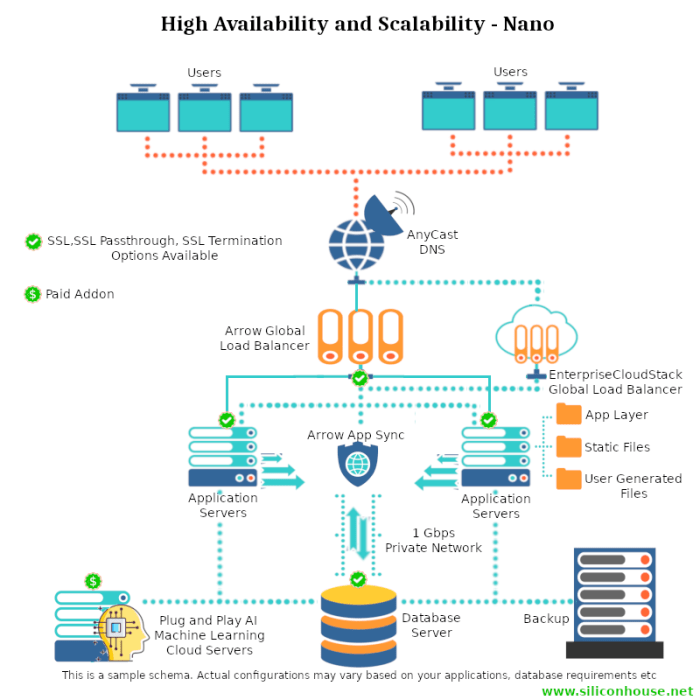
Designing a high-availability server setup for CRM requires careful consideration of the CRM application’s specific needs and potential traffic spikes. A multi-tiered architecture with dedicated servers for database, application, and web layers is often employed. This separation of concerns allows for more granular control over resource allocation and fault tolerance. Implementing a dedicated caching layer can significantly enhance performance and reduce database load, further improving responsiveness.
A well-defined failover strategy, incorporating automated failover mechanisms, is essential for minimal downtime.
Failover Mechanisms
Failover mechanisms are essential components of a high-availability system. They automatically switch traffic to a backup server if a primary server fails. This ensures minimal disruption to service. These mechanisms can be implemented using various technologies, including heartbeat monitoring and load balancers. The implementation should incorporate proactive monitoring and testing of failover procedures, ensuring the system’s reliability in real-world scenarios.
Properly designed failover mechanisms minimize the impact of server outages, preserving customer satisfaction.
Server Components in a High-Availability System
Different server components play distinct roles in a high-availability system. The application server handles requests and processes data, the database server stores and manages data, and the web server facilitates communication between users and the application server. The load balancer directs traffic to available servers, while the failover mechanism automatically switches to a backup server in case of failure.
Understanding the roles of these components is critical for efficient management and maintenance.
Popular Software and Tools
Several popular software and tools are used in high-availability setups. These include load balancers like HAProxy and Nginx, clustering solutions like Pacemaker and Corosync, and monitoring tools like Nagios and Prometheus. These tools streamline the process of creating and maintaining a highly available system, offering a wide range of functionalities for robust management.
Cloud Provider Comparison
| Provider | Feature 1 (e.g., Region Availability) | Feature 2 (e.g., Automatic Scaling) | Feature 3 (e.g., Disaster Recovery) ||—|—|—|—|| AWS | Multiple regions globally, ensuring low latency for users | Dynamic scaling based on demand, adapting to fluctuating traffic | Robust disaster recovery options, including region-specific backups || Azure | Global network, offering high availability in different regions | Automatic scaling for applications and databases | Multiple disaster recovery options with automatic failover || GCP | Worldwide network, providing access to geographically distributed users | Scalable infrastructure that can handle fluctuating workloads | Global distributed network for robust disaster recovery |
Security and Compliance: High-Availability Server Hosting For CRM Customer Service
High-availability CRM systems are prime targets for cyberattacks. Protecting sensitive customer data and maintaining business continuity requires a robust security posture. Ignoring security in a high-availability setup can lead to significant financial losses, reputational damage, and regulatory penalties. This section delves into the critical security aspects of high-availability deployments for CRM customer service.
Importance of Security in High-Availability Systems
Security is paramount in high-availability systems, particularly for CRM, due to the sensitive customer data stored and processed. A single point of failure in a high-availability system can expose this data to malicious actors. A robust security strategy safeguards against unauthorized access, data breaches, and disruptions to service, thereby ensuring customer trust and regulatory compliance.
Implementing Security Measures for High-Availability Deployments
Implementing comprehensive security measures requires a multi-layered approach. This includes strong authentication protocols, robust access controls, and regular security audits. Data encryption at rest and in transit is essential. Regular security patching and updates for all components of the high-availability infrastructure are crucial.
Ensuring Compliance with Relevant Regulations
Compliance with regulations like GDPR and HIPAA is mandatory for handling customer data. High-availability systems must adhere to these regulations. This includes data minimization, data retention policies, and mechanisms for data breach notification. Data sovereignty requirements must be considered in multi-national deployments.
Security Protocols and Tools for High-Availability Deployments
Implementing secure protocols like HTTPS and using tools like intrusion detection systems (IDS) and security information and event management (SIEM) systems are crucial for protecting the high-availability infrastructure. Regular vulnerability assessments and penetration testing are essential for proactively identifying and mitigating potential security risks. Multi-factor authentication (MFA) strengthens access controls, making unauthorized access significantly more difficult.
Examples of Security Breaches Related to CRM High-Availability
Several high-profile breaches have targeted CRM systems with high-availability capabilities. These breaches often exploit vulnerabilities in the underlying infrastructure or weak security configurations. For instance, a poorly configured load balancer could expose sensitive data to unauthorized access. A breach in the database used by the CRM system, even if backed up, could lead to significant data loss.
Security Considerations for Various High-Availability Setups
| Setup | Security Considerations | Mitigation Strategies |
|---|---|---|
| On-premises | Physical security of the hardware, internal network security, and potential vulnerabilities in on-site systems. | Employing robust physical security measures, implementing strong network security protocols (like firewalls), and conducting regular vulnerability scans. |
| Cloud | Security configurations within the cloud provider’s environment, compliance with cloud provider security policies, and potential issues with shared responsibility model. | Carefully configuring security settings within the cloud platform, utilizing cloud provider security services (e.g., security groups, network firewalls), and adhering to the cloud provider’s security policies. |
| Hybrid | Maintaining security consistency across on-premises and cloud environments, securing the connection between them (VPN, secure tunnels), and ensuring data encryption during transfer. | Implementing consistent security policies, using secure connections between on-premises and cloud environments, and encrypting data in transit between the environments. |
Cost Analysis and Return on Investment
High-availability CRM hosting isn’t just about fancy tech; it’s about smart business. Understanding the true cost of downtime, and how high availability prevents it, is key to justifying the investment. Let’s dive into the numbers and see how high availability translates to ROI for your business.High availability isn’t just about buying more servers. It’s about strategically planning for business continuity and minimizing the risk of service interruptions, which can lead to significant revenue loss and damage to your brand reputation.
The cost-benefit analysis must consider the potential for lost revenue, damage to customer relationships, and the cost of fixing any resulting issues.
Total Cost of Ownership (TCO) Analysis
Analyzing the total cost of ownership (TCO) for high-availability server hosting is crucial for making informed decisions. This includes not only the initial purchase price but also ongoing expenses like maintenance, updates, and potential downtime costs. Consider factors like software licenses, hardware upgrades, staff training, and administrative overhead.
Cost-Benefit Analysis of High-Availability Deployments
The cost-benefit analysis assesses the projected benefits against the estimated costs. High-availability solutions often involve a higher initial investment, but the reduced risk of downtime and improved service levels can lead to significant long-term savings. The potential loss of revenue due to downtime is a critical factor in this analysis. The benefits of preventing outages far outweigh the initial cost.
Methods for Calculating ROI of High-Availability Solutions
Calculating the ROI of high-availability solutions involves several methods. One common method is to estimate the potential revenue loss from downtime and compare it to the cost of the high-availability solution. Other methods include calculating the cost of recovery from a disaster, and the cost of customer support issues. Quantify the potential savings from improved efficiency, reduced support calls, and increased customer satisfaction.
Long-Term Financial Implications of Downtime in CRM Applications
Downtime in CRM applications can have significant long-term financial implications. Lost sales, decreased customer satisfaction, and reputational damage can result in substantial financial losses. Consider the cost of lost productivity, customer churn, and the cost of remediation efforts.
Justifying Investment in High-Availability Hosting for CRM
Justifying the investment in high-availability hosting requires a clear demonstration of its value proposition. Highlight the potential revenue gains from reduced downtime, improved customer satisfaction, and enhanced operational efficiency. Clearly define the specific business needs and how high availability addresses those needs.
Examples of Successful ROI Implementations in CRM High-Availability
Numerous businesses have successfully implemented high-availability solutions for their CRM systems. Case studies from companies like [Company Name], showcasing how they reduced downtime, improved customer service, and ultimately increased profitability, can be valuable resources.
Costs and Benefits of Different High-Availability Solutions
The table below Artikels the costs and benefits of different high-availability solutions, providing a comparative analysis.
| Solution | Initial Cost | Ongoing Cost | Benefits |
|---|---|---|---|
| Solution A (Cloud-based HA) | $10,000 – $20,000 | $500 – $1,000/month | Scalability, automatic failover, reduced maintenance |
| Solution B (Dedicated HA Hardware) | $20,000 – $50,000 | $1,000 – $2,000/month | High performance, greater control, potentially higher redundancy |
A well-researched and detailed analysis will allow you to clearly demonstrate the value proposition of high-availability solutions, justifying the investment in your CRM system. Remember, a proactive approach to high availability is much more cost-effective than reacting to a crisis.
Final Wrap-Up
In conclusion, high-availability server hosting is non-negotiable for modern CRM customer service. This guide has Artikeld the essential elements for achieving optimal performance, security, and ROI. By carefully considering the specific needs of your CRM application and implementing the right technologies, you can ensure a positive customer experience and drive business growth. The key takeaway is proactive planning and implementation are crucial for success.
Commonly Asked Questions
What are the common pitfalls in implementing high-availability solutions for CRM systems?
Over-engineering, neglecting proper security protocols, and inadequate testing are common pitfalls. A robust implementation plan is crucial to avoid these problems.
How can I choose the right high-availability solution for my CRM needs?
Consider factors like your budget, scalability requirements, and desired uptime guarantee. A thorough comparison of different solutions is key.
What are the typical costs associated with high-availability server hosting?
Initial setup costs, ongoing maintenance, and potential downtime costs need to be factored into your budget. Thorough cost analysis is essential.
How does high availability impact customer experience?
High availability translates to uninterrupted service, faster response times, and reduced customer frustration. This directly contributes to a better customer experience.