Scaling CRM with Powerful Server Hosting Solutions is crucial for business growth. Outgrowing your current CRM system can be a headache, but choosing the right hosting solution can make the process smoother and more efficient. This guide explores various server hosting options, integration strategies, optimization techniques, and security best practices to help you scale your CRM effectively.
From shared servers to cloud-based solutions, we’ll analyze the pros and cons of each hosting type, focusing on performance, scalability, and cost. We’ll also delve into crucial integration steps, optimization strategies for peak performance, and security measures to protect your valuable data as your CRM grows.
Introduction to CRM Scaling: Scaling CRM With Powerful Server Hosting Solutions
Scaling your CRM isn’t just about adding more features; it’s about ensuring your customer relationship management system keeps pace with your business growth. A robust CRM system is critical for capturing and managing customer interactions, driving sales, and improving customer retention. As your business expands, your CRM needs to adapt and handle increased user activity, data volume, and transaction frequency.
Failing to scale your CRM can lead to bottlenecks, decreased efficiency, and ultimately, lost revenue opportunities.Businesses face numerous challenges when scaling their CRM systems. These challenges include maintaining data integrity and security as the volume of data increases, ensuring smooth transitions for new users and processes, and adapting to changing business needs without disrupting existing workflows. Further, integrating the CRM with other business systems like marketing automation and e-commerce platforms becomes more complex.
Scaling your CRM? Powerful server hosting is key, but you need a reliable platform. Check out how to enhance your CRM systems with reliable server hosting to ensure your data’s safe and your processes run smoothly. Enhance CRM Systems with Reliable Server Hosting will give you the insights you need. Ultimately, the right hosting solution is critical for any successful CRM scaling strategy.
A poorly scaled CRM can hinder your team’s ability to manage leads, track deals, and support customers effectively, leading to lost opportunities and decreased efficiency.
Factors Influencing CRM Scaling Needs
Several factors determine the necessity for CRM scaling. User growth is a primary driver; as your customer base expands, your CRM must handle more user accounts and interactions. Similarly, the volume of customer data increases, demanding more storage capacity and processing power. Transaction frequency, especially in e-commerce businesses or high-volume service industries, also significantly impacts CRM scaling requirements.
These factors often intertwine, making scaling a continuous process rather than a one-time event.
CRM Scaling Strategies
Successful CRM scaling strategies involve careful planning and execution. Implementing a phased approach is often beneficial, allowing businesses to gradually adapt to increasing demands without disrupting existing operations. Cloud-based CRM solutions often provide a more flexible and scalable infrastructure than on-premise systems. Moreover, adopting best practices for data management, such as data cleansing and standardization, is essential to maintaining data integrity as the data volume increases.
Additionally, regular performance monitoring and optimization of the CRM system can identify bottlenecks and improve efficiency.
Types of CRM Systems and Their Scalability
| CRM Type | Description | Suitability for Scaling |
|---|---|---|
| Cloud-Based CRM | Hosted on remote servers, accessible via the internet. | Highly scalable, typically offering flexible resource allocation and automatic updates. |
| On-Premise CRM | Installed and maintained on company servers. | Scalability depends on the company’s IT infrastructure and capacity to upgrade hardware and software. Requires significant upfront investment and IT expertise. |
| Hybrid CRM | Combines cloud and on-premise functionalities. | Offers flexibility to scale different aspects of the CRM, often allowing for a gradual transition to cloud-based systems. |
Cloud-based CRM solutions often prove to be more adaptable to rapid growth, as their infrastructure is designed for scalability. On-premise systems, however, may be more suitable for organizations with specific security or compliance needs, although their scalability is more contingent on the company’s IT resources. Hybrid systems provide a balance, allowing businesses to leverage cloud advantages while retaining control over certain aspects.
Choosing the right type of CRM system for your business’s needs is a crucial step in achieving a successful scaling strategy.
Server Hosting Solutions for CRM
Choosing the right server hosting solution is crucial for CRM scaling. A poorly performing server can cripple your CRM’s ability to handle user requests, leading to frustrated customers and lost revenue. Understanding the different hosting options and their strengths and weaknesses is key to making an informed decision. A robust and scalable hosting environment ensures your CRM can grow with your business, handling increased data volume and user traffic without hiccups.
Types of Server Hosting Solutions, Scaling CRM with Powerful Server Hosting Solutions
Different hosting solutions cater to varying needs and budgets. Understanding these options is vital to selecting the right fit for your CRM. Shared hosting is the most budget-friendly option, but it lacks the performance needed for large-scale CRMs. VPS hosting provides a dedicated portion of a server, offering more control and performance than shared hosting, while still being more affordable than dedicated servers.
Dedicated servers give you complete control over the hardware, making them ideal for high-performance needs, but they come with the highest price tag. Cloud hosting offers flexibility and scalability, adapting to your needs as they change.
Performance and Scalability Comparison
The performance and scalability of each hosting type directly impact your CRM’s ability to handle increasing data and user demands. Shared hosting, due to its nature of multiple users sharing the same server resources, often experiences performance bottlenecks as the number of users increases. VPS hosting provides a dedicated portion of server resources, leading to better performance than shared hosting, but it might not be sufficient for extremely high traffic.
Dedicated servers offer the best performance and scalability for high-traffic CRMs, but they come with significant upfront costs. Cloud hosting offers the most flexibility and scalability, dynamically adjusting resources to meet demands. The scalability is often automated and handled by the cloud provider, making it a highly effective option for growing businesses.
Benefits and Drawbacks in CRM Scaling
Each hosting solution presents unique benefits and drawbacks in the context of CRM scaling. Shared hosting’s primary advantage is its affordability, making it suitable for smaller businesses with modest needs. However, its limitations in performance and scalability restrict growth. VPS hosting provides a good balance between cost and performance, allowing for greater control and scalability than shared hosting. Dedicated servers offer the highest performance and control, but their high cost can be a deterrent.
Cloud hosting’s scalability is unmatched, adapting to fluctuations in demand, but it may require a more in-depth understanding of cloud services.
Crucial Performance Metrics
Choosing a hosting solution involves evaluating key performance metrics. Response time, uptime, and resource utilization are crucial factors. Response time measures how quickly the server responds to user requests. Uptime reflects the server’s availability, and resource utilization gauges how efficiently the server uses its allocated resources. Monitoring these metrics provides insights into the server’s performance and its ability to handle future growth.
Technical Specifications for Growing CRM
The technical specifications of your server are essential for a growing CRM. RAM (Random Access Memory) capacity is critical for handling large datasets and concurrent users. CPU (Central Processing Unit) speed directly impacts processing power and response time. Storage space dictates the amount of data your CRM can hold. As your CRM grows, you’ll need to consider increasing these specifications to ensure smooth operation.
Cost Comparison Table
| Hosting Type | Cost | Scalability | Performance |
|---|---|---|---|
| Shared Hosting | Low | Limited | Low |
| VPS Hosting | Medium | Moderate | Moderate |
| Dedicated Server | High | High | High |
| Cloud Hosting | Variable (based on usage) | High | High |
Integrating Hosting with CRM Systems
Integrating your CRM with a robust server hosting solution is crucial for scalability and performance. Choosing the right hosting and properly integrating it with your CRM can dramatically improve your customer experience, reduce downtime, and ultimately drive more sales. It’s no longer an option; it’s a necessity in today’s competitive landscape. This is where the real magic happens – connecting the dots between your customer data and the powerful servers that keep it all running smoothly.A seamless integration ensures data flows effortlessly between your CRM and your hosting platform, enabling your team to access and manage customer information efficiently.
This eliminates bottlenecks and allows for faster response times to customer inquiries, ultimately boosting satisfaction and loyalty. This smooth workflow is essential for any growing business.
Methods for Integrating Hosting Solutions with CRM Platforms
Proper integration requires careful planning and execution. Several methods exist for integrating your chosen hosting solution with your CRM platform. These methods involve different levels of technical expertise, from simple API integrations to more complex custom solutions.
- API Integrations: Many CRM platforms and hosting providers offer Application Programming Interfaces (APIs). These APIs allow for automated data exchange between the two systems. Using APIs is often the easiest and most cost-effective approach, requiring minimal custom coding. Examples include using the Salesforce API to connect to a cloud hosting provider or integrating HubSpot with a dedicated server solution through their API.
- Custom Integrations: In some cases, a custom integration may be necessary, especially when the CRM or hosting provider doesn’t offer a pre-built API or the required functionality isn’t available through standard APIs. This method typically requires more technical expertise and resources but offers greater flexibility and control over the integration process. Custom integrations might be necessary for complex data transformations or specialized workflows.
Security Measures During Integration
Security is paramount during any integration process, especially when dealing with sensitive customer data. Protecting your CRM data from unauthorized access and ensuring the integrity of the data transfer is vital.
- Data Encryption: Encrypting data both in transit and at rest is crucial. This ensures that even if a data breach occurs, the information remains confidential. Implement encryption protocols at every stage of the integration process, including data transmission between the CRM and hosting servers.
- Authentication and Authorization: Implementing strong authentication mechanisms is critical. Use secure passwords, multi-factor authentication, and access controls to restrict access to sensitive data. Establish clear protocols for user roles and permissions within both the CRM and hosting environment.
- Regular Security Audits: Regular security audits of the integrated system are essential. These audits help identify vulnerabilities and ensure that security measures are up-to-date and effective. Proactively address any identified weaknesses to maintain a secure environment.
Technical Expertise Required for Integration
The level of technical expertise needed for integration varies depending on the complexity of the CRM and hosting solutions, and the chosen integration method.
- API Integrations: API integrations often require a developer with experience in API programming and familiarity with the specific APIs of both the CRM and hosting provider. This is generally more straightforward and cost-effective than custom integrations.
- Custom Integrations: Custom integrations require more extensive technical expertise, encompassing both CRM and server-side programming skills, along with a deep understanding of database management and security protocols. This often involves specialists with expertise in various technologies.
Examples of Successful Integrations
Several businesses have successfully integrated their CRM systems with server hosting solutions. These integrations have led to significant improvements in performance and efficiency. For example, companies using Salesforce have successfully integrated their CRM with AWS cloud hosting to leverage scalable infrastructure and enhanced security. Similarly, companies utilizing HubSpot CRM have integrated with various VPS hosting providers to manage customer data more efficiently.
CRM System Compatibility with Hosting Types
The compatibility of various CRM systems with different hosting types varies. A well-structured table can illustrate the possible compatibility.
| CRM System | Cloud Hosting | VPS Hosting | Dedicated Server Hosting |
|---|---|---|---|
| Salesforce | High | High | High |
| HubSpot | High | High | High |
| Zoho CRM | High | High | High |
| Microsoft Dynamics 365 | High | High | High |
Note: “High” indicates strong compatibility and support for integration.
Optimizing CRM Performance on Servers
So, you’ve got your CRM up and running on a killer server hosting solution. Now, let’s talk about squeezing every last drop of performance out of it. This isn’t just about speed; it’s about a smoother user experience, happier customers, and a healthier bottom line. We’re going to dive into the nitty-gritty of optimizing your CRM, from database tweaks to load balancing strategies.High-performing CRM systems are crucial for any business.
They help you manage customer interactions, track sales, and automate tasks. By optimizing your CRM’s performance on your chosen server, you can ensure smooth operation, reduce errors, and enhance overall efficiency. This directly impacts your bottom line, as happy customers and a streamlined workflow contribute to higher profits and greater market share.
Database Optimization Strategies
Database optimization is fundamental to CRM performance. A poorly optimized database can lead to sluggish responses and bottlenecks. Indexing is key; ensure crucial data points are indexed for rapid retrieval. Query optimization is equally important. Analyze your queries to identify slow ones and rewrite them for better efficiency.
Regular database maintenance, including cleaning up unused data and running database integrity checks, is vital for maintaining optimal performance. Consider using stored procedures for frequently used operations, as they often perform better than multiple individual queries.
Caching Techniques for CRM Responsiveness
Caching is like having a well-stocked pantry. It stores frequently accessed data, reducing the need to retrieve it from the database every time. This drastically improves response times, particularly for frequently accessed elements of the CRM system. Different types of caching exist, like object caching (storing objects in memory), query caching (storing results of frequently executed queries), and page caching (storing entire web pages).
Choosing the right caching strategy depends on your specific CRM and its usage patterns.
Load Balancing Techniques for Increased Traffic
As your CRM’s popularity grows, handling increased traffic is essential. Load balancing distributes the workload across multiple servers. This prevents a single server from being overwhelmed, ensuring uninterrupted service. Utilizing load balancers helps you scale your CRM system effortlessly as your user base and data volume grow. Cloud-based load balancing solutions are often more scalable and cost-effective than dedicated hardware.
Different load balancing algorithms can be used based on the specific needs of the application.
Monitoring and Troubleshooting Performance Issues
Monitoring performance is a continuous process, not a one-time thing. Use tools that provide real-time insights into server resource usage, database query performance, and application response times. This proactive monitoring helps identify potential bottlenecks early. Implementing logging and error tracking systems allows for easy analysis and resolution of performance issues. Knowing what is happening on your server, and why, allows you to diagnose and solve problems before they impact your users.
Comparison of Optimization Techniques
| Optimization Technique | Description | Effectiveness |
|---|---|---|
| Database Indexing | Creating indexes on frequently queried columns | High; significantly improves query performance |
| Query Optimization | Analyzing and rewriting slow queries | High; minimizes database overhead |
| Caching | Storing frequently accessed data in memory | High; drastically improves response times |
| Load Balancing | Distributing traffic across multiple servers | High; prevents single points of failure and allows scaling |
| Monitoring and Troubleshooting | Proactive monitoring and analysis of performance metrics | High; allows for early identification and resolution of issues |
Security Considerations in Scaling
Scaling your CRM is exciting, but it also introduces significant security risks. A poorly secured system can lead to data breaches, financial losses, and reputational damage. This section dives deep into the security considerations crucial for a smooth and safe scaling process. Think of it like building a fortress – you need strong walls and a vigilant guard to protect your valuable assets.Scaling a CRM often means dealing with more data, more users, and more potential entry points for attackers.
This increase in complexity necessitates a proactive and multi-layered security strategy. This includes robust access controls, regular backups, and strong encryption protocols. By implementing these measures, you safeguard your valuable customer data and maintain trust.
Scaling your CRM with powerful server hosting solutions is crucial for handling growth, but understanding market fluctuations like the Bitcoin Halving and Its Effect on Market Prices Bitcoin Halving and Its Effect on Market Prices can also influence your tech stack choices. A solid hosting infrastructure ensures your CRM remains responsive and reliable, no matter the market conditions.
Ultimately, the right hosting solution is key for a smooth CRM operation.
Security Risks Associated with Scaling
CRM scaling introduces new vulnerabilities. Increased user access, larger data volumes, and more complex infrastructure create more attack vectors. These risks include unauthorized access to sensitive data, data breaches, and disruptions to service. Phishing attacks, malware infections, and denial-of-service (DoS) attacks are all potential threats amplified by scaling. A robust security posture is essential to mitigate these risks.
Security Measures to Implement During Scaling
Implementing strong security measures is paramount during scaling. This includes multi-factor authentication (MFA) for all user accounts to add an extra layer of security. Regular security audits and penetration testing help identify potential vulnerabilities before they are exploited. Keeping your CRM and server software updated with the latest security patches is critical. Implementing robust firewall configurations and intrusion detection systems are also essential.
Regular security awareness training for your team will help prevent human errors.
Importance of Data Encryption and Access Control
Data encryption is crucial for protecting sensitive customer information. Encrypting data both in transit and at rest ensures confidentiality even if unauthorized access occurs. Access control mechanisms limit data visibility to only authorized personnel. This prevents accidental or malicious data exposure. Role-based access control (RBAC) allows you to grant different permissions to different users based on their role.
Best Practices for Maintaining Data Integrity During Scaling
Maintaining data integrity is vital during scaling. Implement strict data validation rules to ensure accuracy and consistency. Regular data backups are critical to restoring data in case of system failure or malicious attacks. Employ version control systems to track changes and revert to previous versions if needed.
Methods for Regularly Backing Up Data
Regular backups are essential for data recovery. Implement a robust backup and recovery strategy that includes full backups, incremental backups, and differential backups. Store backups offsite to protect against local disasters. Test the recovery process regularly to ensure data can be restored quickly and effectively. Cloud-based backup solutions offer additional benefits.
Security Protocols and Their Importance in CRM Scaling
| Security Protocol | Importance in CRM Scaling |
|---|---|
| Multi-Factor Authentication (MFA) | Adds an extra layer of security, preventing unauthorized access even if passwords are compromised. |
| Regular Security Audits | Identify vulnerabilities before they are exploited, preventing potential breaches. |
| Firewall Configurations | Control network traffic, preventing unauthorized access and protecting against cyberattacks. |
| Intrusion Detection Systems (IDS) | Monitor network traffic for malicious activity, alerting administrators to potential threats. |
| Data Encryption | Protects sensitive data from unauthorized access, even if systems are compromised. |
| Access Control | Limits data visibility to only authorized personnel, preventing unauthorized access and misuse. |
| Regular Backups | Ensures data can be recovered in case of system failures or malicious attacks. |
Cost Analysis and ROI
Scaling your CRM isn’t just about adding features; it’s about making sure the investment pays off. You need a clear picture of the costs involved, not just for the initial setup, but for the long haul. This includes considering the total cost of ownership (TCO), which encompasses everything from server maintenance to potential downtime. Understanding the return on investment (ROI) is crucial to justifying the expense and ensuring you’re getting the most out of your CRM upgrade.
Factors Influencing Total Cost of Ownership (TCO)
The TCO of a CRM scaling project isn’t a simple calculation. It goes beyond the initial hosting costs. Factors like software licensing fees, ongoing maintenance contracts, potential data migration expenses, and the need for additional personnel (like IT support or CRM specialists) all contribute. Even unexpected downtime can dramatically increase costs if it disrupts your business operations.
Don’t forget about the cost of training your team to use the upgraded system. A poorly trained team can lead to decreased productivity and lost revenue.
Analyzing Costs of Different Hosting Solutions
Different hosting solutions will obviously have different price points. Cloud hosting, for example, often offers scalability and flexibility, but you might pay a recurring monthly fee. Dedicated servers, on the other hand, provide more control and potential for customization, but often involve higher upfront costs and ongoing maintenance responsibilities. A hybrid approach might balance these needs. Careful evaluation of your specific business requirements and growth projections is crucial to choosing the right hosting solution.
Return on Investment (ROI) Considerations
ROI calculations for CRM scaling go beyond simply comparing initial costs. Consider the potential increase in sales, improved customer satisfaction, and streamlined workflows. For example, a CRM system that allows for better lead management might directly translate into a higher conversion rate, thus generating a tangible ROI. Calculate the expected increase in revenue, the decrease in operational costs, and the potential savings in time.
Also factor in any reductions in customer support costs.
Case Studies of Successful Cost-Benefit Analyses
Numerous businesses have successfully implemented CRM scaling strategies with positive ROI. One example is a mid-sized e-commerce company that transitioned from a shared hosting environment to a dedicated server. This allowed them to handle a surge in online orders, leading to a significant increase in sales and a demonstrable ROI within the first year. Another example could be a company that implemented a cloud-based CRM, allowing them to easily scale resources as their business grew, resulting in a more efficient and cost-effective system.
These examples demonstrate the importance of a thorough cost-benefit analysis.
Projected Costs and ROI for Various Scaling Scenarios
| Scaling Scenario | Initial Cost (USD) | Recurring Cost (USD/month) | Projected ROI (USD/year) | TCO (USD/3 years) |
|---|---|---|---|---|
| Basic Scaling | 5,000 | 250 | 10,000 | 18,750 |
| Moderate Scaling | 10,000 | 500 | 20,000 | 37,500 |
| Extensive Scaling | 20,000 | 1,000 | 40,000 | 75,000 |
Note: These figures are estimates and may vary based on specific business needs and hosting solutions.
Future Trends in CRM Scaling
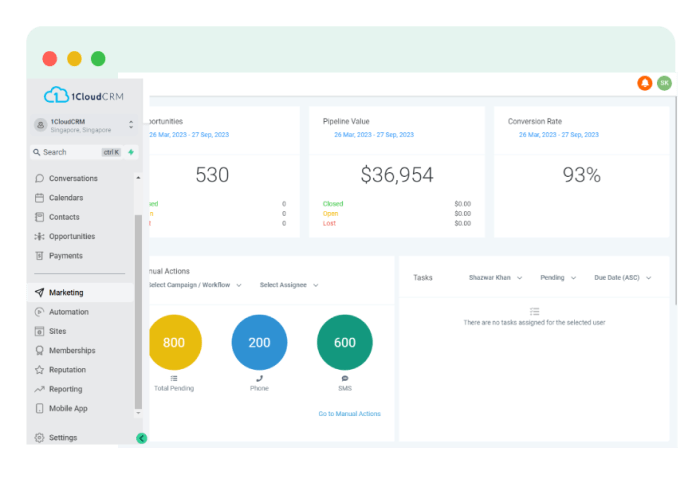
Scaling your CRM isn’t just about bigger servers anymore. It’s about anticipating how your customers will interact with your brand tomorrow. The future of CRM scaling hinges on embracing emerging technologies, understanding the evolving needs of your business, and adapting your infrastructure to accommodate these changes. This means staying ahead of the curve, not just keeping up.
Emerging Trends Impacting CRM Scaling
The CRM landscape is rapidly evolving, driven by advancements in cloud computing, artificial intelligence, and serverless architectures. These trends are reshaping how businesses interact with their customers, demanding a dynamic approach to CRM scaling. Businesses need to understand these shifts to ensure they’re not left behind.
Role of Cloud-Native Applications in Future CRM Solutions
Cloud-native applications are fundamentally changing how CRM systems are built and deployed. These applications are designed for the cloud, offering greater flexibility, scalability, and speed. They’re built using microservices, enabling independent scaling and deployment of individual components. This approach allows for rapid adaptation to changing customer needs and market demands. For instance, a cloud-native CRM can easily add new features or integrate with other services without requiring a complete system overhaul.
Impact of Artificial Intelligence and Machine Learning on CRM Scaling
AI and machine learning are revolutionizing CRM interactions. AI-powered chatbots can handle routine customer service inquiries, freeing up human agents to focus on complex issues. Machine learning algorithms can analyze customer data to predict future needs and tailor marketing campaigns, leading to more effective engagement and improved customer lifetime value. Imagine a system that automatically identifies high-value customers and proactively offers personalized support.
Evolving Need for Serverless Architecture in Scaling CRM Systems
Serverless architecture is gaining traction in CRM scaling. It allows developers to focus on application logic without managing servers. This eliminates the need for infrastructure provisioning and management, simplifying scaling and reducing operational costs. By leveraging cloud providers’ infrastructure, serverless CRM solutions can scale dynamically to meet fluctuating demand, adapting to peak usage times without manual intervention.
Illustrative Examples of Future CRM Scaling Approaches
Consider a retail company using a cloud-native CRM integrated with AI-powered chatbots. The chatbot handles routine customer inquiries, while human agents focus on resolving complex issues and building stronger customer relationships. The system can dynamically scale server resources during peak shopping periods, ensuring optimal performance without significant upfront investment. Another example could be a SaaS company using serverless functions to process customer data and provide real-time insights, allowing for immediate adjustments to marketing strategies and product development.
Future Technologies and Their Implications for CRM Scaling
| Future Technology | Implications for CRM Scaling |
|---|---|
| Cloud-native applications | Increased scalability, flexibility, and speed; improved integration with other services; reduced infrastructure management. |
| Artificial intelligence and machine learning | Enhanced customer service, personalized marketing campaigns, improved data analysis for predictive insights, and automated tasks. |
| Serverless architecture | Dynamic scaling, reduced operational costs, and focused development on application logic. |
| Blockchain technology | Enhanced security and data integrity; improved transparency and trust in customer interactions; potential for decentralized CRM models. |
| Internet of Things (IoT) | Integration of real-time data from connected devices for improved customer understanding; personalized experiences based on contextual information. |
Final Thoughts

In conclusion, scaling your CRM effectively requires careful consideration of hosting solutions, integration methods, and optimization strategies. By understanding the different hosting options, integrating them seamlessly with your CRM, and optimizing performance, you can ensure a smooth scaling process. Prioritizing security and cost analysis throughout the process is vital for a successful and profitable outcome. The future of CRM scaling is dynamic, incorporating emerging technologies like cloud-native applications and AI, requiring continuous adaptation and investment in these technologies.
Quick FAQs
What are the common challenges businesses face when scaling their CRM systems?
Businesses often face challenges like increased data volume, user growth, and transaction frequency. Existing infrastructure may not be equipped to handle the increased load, potentially slowing down performance and causing system instability. Migrating to a more powerful server hosting solution is crucial to address these challenges.
What are some common CRM platforms compatible with various hosting solutions?
Many CRM platforms, such as Salesforce, HubSpot, and Zoho CRM, are compatible with different server hosting solutions, including cloud, VPS, and dedicated servers. Choosing the right platform and hosting type depends on your specific needs, budget, and technical expertise.
How important is database optimization in CRM scaling?
Database optimization is critical for CRM scaling. A well-optimized database ensures fast query processing, minimizing response times for users. This translates to a better user experience and enhanced overall system performance.
What security measures should be implemented when scaling a CRM?
Data encryption, robust access controls, and regular data backups are essential security measures. Implementing these safeguards protects sensitive customer data and maintains data integrity during the scaling process.